
Reality as we know it
I want to talk about the idea of realism and how it is being used to unleash a wave of blandness upon us. And it’s not a new issue either. Underneath this malaise, is an old and familiar enemy. Do be patient with this essay - it’s long and involved and will take you from AI to gaming to movies to racial politics and media literacy.
Last week, NVIDIA made a lot of gamers unhappy by introducing its DLSS 5 technology. It allegedly improves upon game graphics by making them more “realistic”.
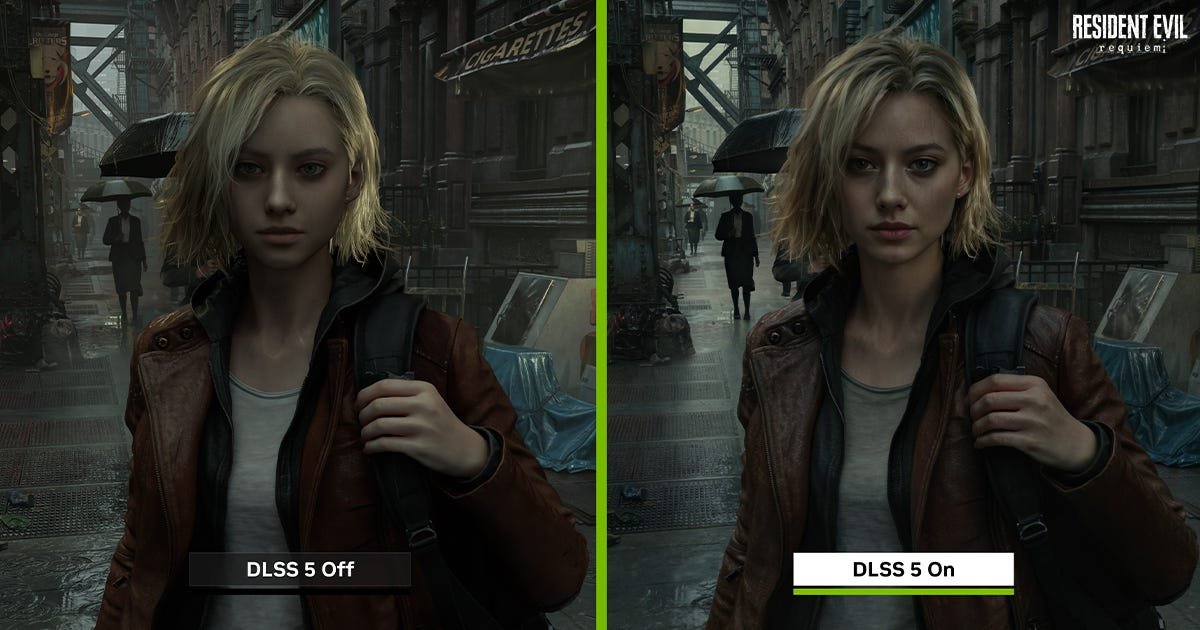
Apparently, more realistic means putting lipstick and makeup on a character and removing rainwater from the street she is standing in.
The reason this didn’t work for gamers is that many of them are not convinced that “more realistic” is the same thing as “better”. After all, right now, Slay the Spire 2, a literal card game with practically no animation or graphical fanciness, is doing three times better than Marathon, a triple-A game with “better” graphics by Bungie Studios, funded by Sony itself. Slay The Spire 2 was made by an independent, 12-person studio. Bungie employed more than 300 developers (out of its total staff of more than 800) on Marathon and according to analysts, spent something between $90 million and $180 million on marketing it.
More realistic graphics don’t make a better game. Good game mechanics do. Some of the best games I have ever played employed a semi-realistic or cartoony style. That didn’t make their graphics bad, it made them different. Why then, is higher graphical fidelity an aspirational value for some of the biggest gaming studios in the world? What is making them think “realistic” is the benchmark they should be aiming for?
We’ll get to that. But first, let us talk about the new trailer for the upcoming MCU movie Spider-Man: Brand New Day. Among various other things, it featured a shot of the inside of Spider-Man’s mask.
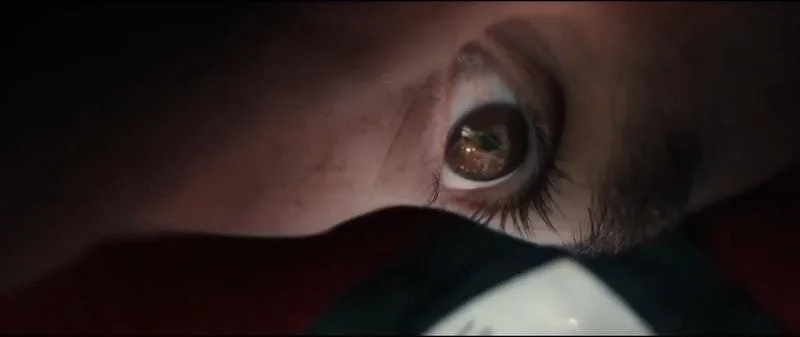
A shot from the new Spider-Man movie trailer showing Peter Parker’s eyes from inside the mask.
I haven’t been excited about superhero movies in a long time, and this trailer gave me no real reason for excitement either, but I presume this shot is the director’s way of saying something. Perhaps about the man behind the mask feeling trapped by his superhero identity, or about how we the audience need to see him as human instead of superhuman. Or perhaps it is a parallel between Peter Parker and Tony Stark, another character we frequently saw inside his mask, interacting with the interface to his high-tech suit. We’ll find out I guess.
But at least some of the chatter about the trailer online is complaining about the lack of realism in this shot. How, they ask, is it possible for there to be so much space inside the mask? It’s just not realistic, they say.
On the face of it, this is a clear case of artistic vision being devalued in favour of some conception of realism. An approach whereby all media is being “improved” in the general direction of “realistic”. The people grumbling about the mask shot and the studios trying to make game graphics better both seem to be doing the same thing - closing off avenues of meaning that are internal instead of external.
In a world where nothing means anything except that which is visually apparent about it, no one looks for hidden meanings, no one seeks subtle insights, and no one values those who might offer such depth. Things are what they are, and that’s it. They can’t stand for anything, they can’t be bridges to other understandings, and they can’t be used to say something apart from what their appearance says. It is the death of metaphor, the sad demise of artistic intent.
We see this happening in the wider world too. Symbols become more important than the thing they are supposed to represent. The song becomes more important than what it means. The flag becomes more important than the nation. The appearance of democracy becomes more important than democratic values. The flattening of meaning is something that time itself does to culture.
But there is more to this than that.
Don’t get me wrong. All that I said above is true. But there is something more sinister going on here that we need to pay attention to.
The void left behind after the death of meaning is a hoax, just like all the other doomer scenarios where AI wipes out all life on Earth. Culture is not being replaced with a lack of culture. Something very specific is taking over the moral and cultural landscape that once belonged to artistic intention. I fear that ‘death of art’ doomerism is preventing us from seeing this.
What we get after the death of artistic intent is actually the machinic reality. Or rather, the reality of those who built and support the machine. It is no surprise that those most in favour of AI-generated slop are grifters who use AI to nudify women on Twitter and like videos by influencers who tell their young audiences that feminism is destroying society. They’re also the ones most likely to say completely ass-backwards things like this.
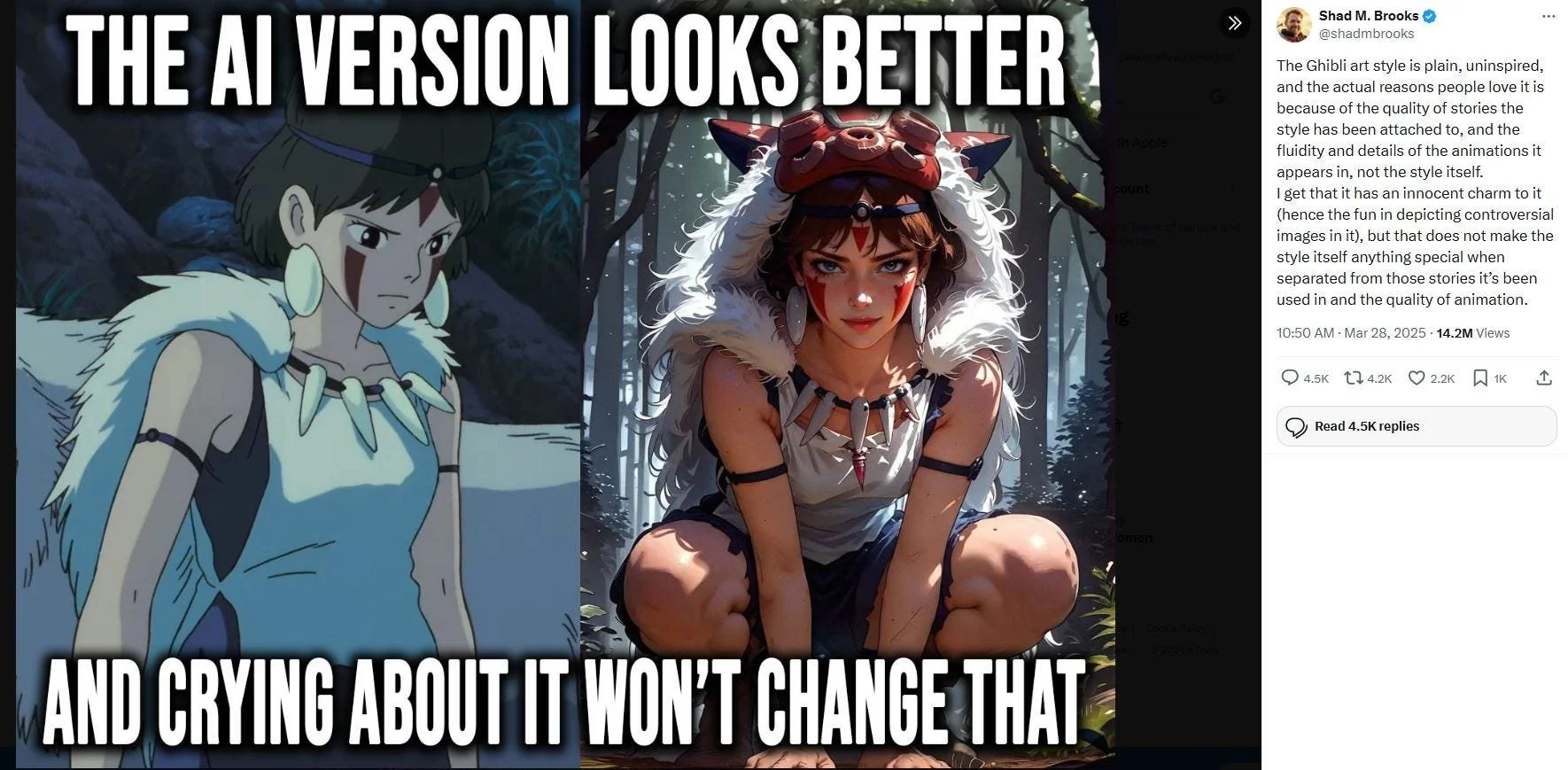
Apparently, more realistic means more sexy, less personality, and zero agency. Just bland, decorative mannequins.
This is the same strain of behaviour that makes people try to replace human friends and family with AI companions because ChatGPT is better than any real girlfriend / boyfriend who is capable of disagreement and talking back. After all, the chatbot is very “realistic”, isn’t it?
What we are being pushed towards is not some kind of post-meaning vacuum. It is a very specific kind of manufactured reality. The reality of a specific culture. Parts of it come from the modern-day life-optimising, book-summarising, entrepreneurial hustle culture that needs everything to be simple and easily digestible bullet points. Parts of it come from the land that is home to these ideas and the people who live by them - Silicon Valley and the mostly White tech bros who populate its buildings. This is the culture of those who ‘move fast and break things’ and the culture of those who talk of taking the red pill while being the most useless blue-pilled fuckwits this planet has ever seen.
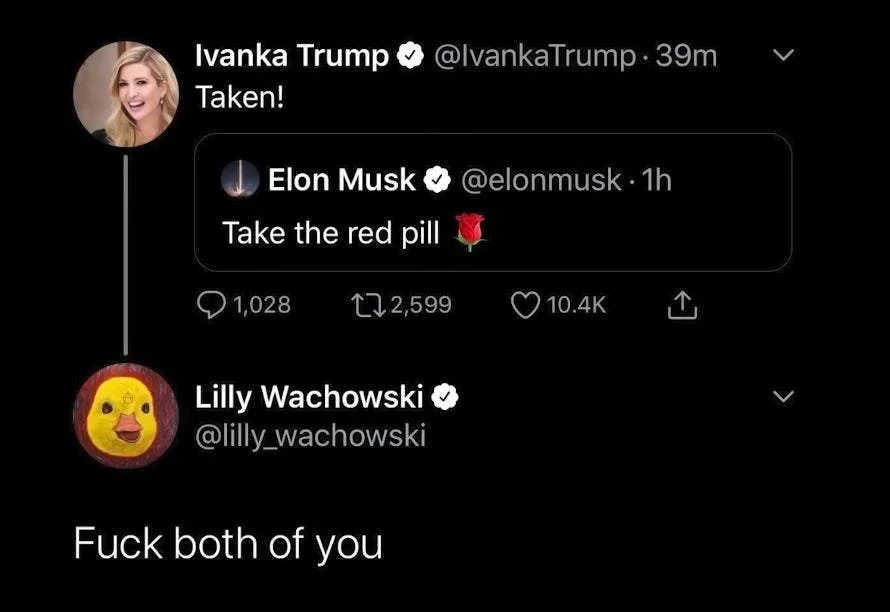
Due credit to Anthony Gramuglia for this screenshot and this insight. Subscribe to him on YouTube, will you?
This is also the culture of those who rail against DEI and complain about “woke” Hollywood. One particular grievance this crowd keeps bringing up is “forced diversity” - the idea that people from diverse backgrounds are being forced into movies and shows for political brownie points, thus making them - wait for it - “unrealistic”.
People who complain about forced diversity seem to be of the view that their favourite fantasy franchises, full of completely believable things like dragons, magic, and glowing artifacts, are being ruined by the inclusion of bizarre and unnatural things like women, people of colour, and non-binary gender identities. Apparently, there is something fundamentally more believable and “real” about entire fantasy kingdoms full of White people and this hard reality is compromised when people who are not White show up on screen.
As someone from a land where diverse groups full of people with different skin colours and even different languages are a common occurrence, this framing of reality strikes me as rather silly. It also strikes me that there must be a specific kind of person who might think of a race-based monoculture as some kind of natural default. Perhaps this person has only ever experienced life in a monoculture. Perhaps they have not been exposed to people from different backgrounds and people who looked and spoke differently from them and that is why any departure from their monocultural reality makes them think the sky is falling.
But do such monocultures really exist?
I spoke of Indian diversity just now but even America, home of Hollywood, seems plenty colourful to me. Sure, there will be some who have never stepped out of their Whites-only neighbourhoods, just as there are Hindus in India who’ve never stepped outside their caste-gated localities and find themselves bewildered by the presence of people from other castes and religions when they visit a metropolitan city. But such pockets are not objective definitions of reality - they’re just pockets.
Why then, do so many White boys get their underpants in a bunch at the slightest sign of dark skin? If they are not in a monoculture, why do they expect the reality of their favourite fantasy show to be represented by a monocultural aesthetic?
The faulty default
Thing is, the monoculture itself is an illusion that these people have started thinking of as a default value. It isn’t natural. It is a product of White supremacism and White centrism. It is the result of a media landscape that was occupied (and I am using that word advisedly) for decades by White actors, and which is now slowly opening up and beginning to reflect the natural diversity of the world it exists in. Seriously, go watch Anthony Gramuglia’s 2-hour video on this.
Kahlil Greene has a great post up on History Can’t Hide about how old Hollywood took measures to preserve American values and the things it kept out of movies ended up being “class struggle, police brutality, labor power, anti-fascism, [and] racial critique”. These days, Kahlil writes:
…the language has been updated. The Motion Picture Alliance pledged to protect “American ideals.” Today’s version talks about “merit,” “audience fatigue,” and the threat of “DEI propaganda.” The mechanism is functionally the same: create a political threat environment, attach that threat to specific kinds of stories and storytellers, and let executives do the rest.
Forced diversity isn’t a real thing. If anything, the problem is forced uniformity. The world is naturally diverse. Unless motivated actors try to deliberately bury that diversity under tons of cultural and political bias, that diversity will naturally move in to fill creative avenues and result in the creation of myriad and colourful works depicting reality.
White supremacism is the idea that Whiteness is a superior value. It’s slightly more benign version is that Whiteness is a default value. That if we do nothing to the stories, they will naturally end up White and that the only reason people of colour are showing up on screen is because of political meddling. There are other similar assumptions too, like the idea of the male default. No one will ask you why all the characters in your story are male. But if you write an all-female cast, people will ask why. This happens not because there is something weird about an all-female cast, but because long periods of exposure to stories with majority male characters have given many people the mistaken idea that there is something natural about those depictions - something real.
And this faux real is what we are being driven towards, thanks to the cultural weight of White supremacism in America and to the uniformising influence of big tech AI companies that are actively or passively aligned with the modern Alt-Right. It is a bland new normal that seeks to bury the different, the weird, and the strange, to build a landscape where everything looks and feels the same. Much like a new global monoculture that its proponents are looking to turn into the default definition of art, life and perhaps humanity itself.
Ursula’s Reality
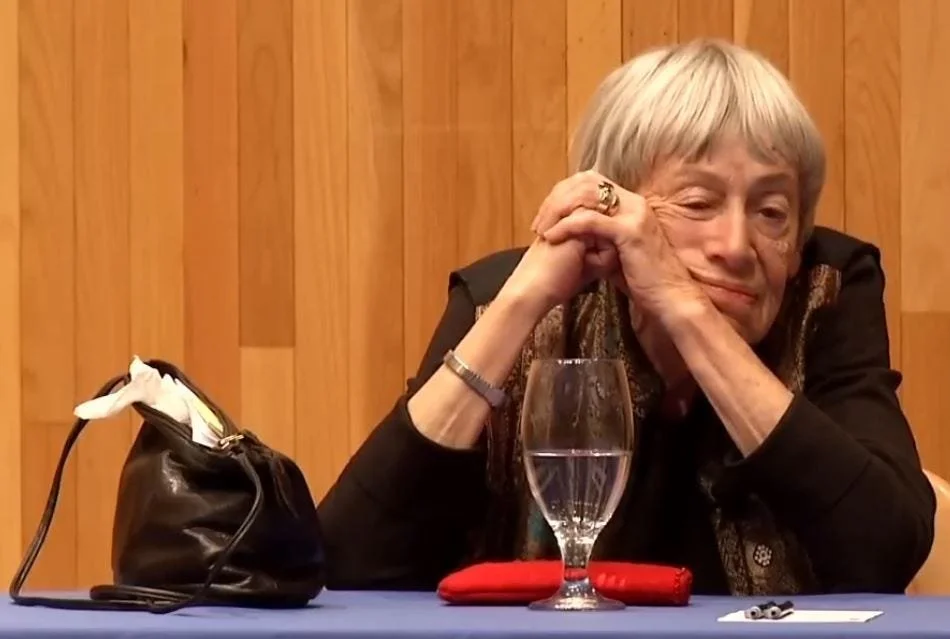
The late Ursula K Le Guin
White culture casts an overwhelmingly long shadow that often swallows indigenous minds. The reason I wrote this essay is not because an online racist said something that ticked me off. Those I can ignore. It was because an Indian boy told me he doesn’t like “forced diversity”. Many Indians (like me from a decade ago) lack awareness of systemic flaws like caste and class, so it’s not really surprising that some of them may not know that many popular online refrains (“go woke, go broke” anyone?) may be inspired by White supremacist talking points. But that doesn’t make it hurt any less.
Speculative fiction has two problems today. The first problem is that many historical SFF works have encouraged the idea of a fantasy monoculture and featured a White / Eurocentric aesthetic, thus creating the notion that Whiteness is a default value that must not be deviated from. The second is that even SFF that has embraced or encouraged diversity is being hijacked by tech bros and used in the service of their reprehensible personal bigotries. Elon Musk is an example, taking the phrase “red pill” from the Matrix, a film made by trans siblings Lana and Lilly Wachowski, and using it to promote a transphobic and White supremacist worldview. There are many other examples, some appropriating the Lord of the Rings, some Star Trek. If you want to explore the full range of the Alt-Right’s appropriations, a great resource that can help you is the Hugo-winning book Speculative Whiteness, by Jordan S. Carroll.
In a speech she gave in 2014, SFF legend Ursula LeGuin spoke of why we need to be able to see “other ways of being”.
Hard times are coming, when we’ll be wanting the voices of writers who can see alternatives to how we live now, can see through our fear-stricken society and its obsessive technologies to other ways of being, and even imagine real grounds for hope. We’ll need writers who can remember freedom — poets, visionaries — realists of a larger reality.
Right now, we need writers who know the difference between production of a market commodity and the practice of an art. Developing written material to suit sales strategies in order to maximise corporate profit and advertising revenue is not the same thing as responsible book publishing or authorship.
…
Books aren’t just commodities; the profit motive is often in conflict with the aims of art. We live in capitalism, its power seems inescapable — but then, so did the divine right of kings. Any human power can be resisted and changed by human beings. Resistance and change often begin in art. Very often in our art, the art of words.
When fighting Alt-Right blandness, it is not enough for our approach to be anti-RW. We need to be pro-something. I can’t think of a better world to advocate for than a diverse one full of colour and hope. LeGuin consciously filled her Earthsea stories with non-White populations and loudly complained when a TV series based on them was Whitewashed into blandness. Series like NK Jemisin’s Broken Earth Trilogy continue that fight today by openly addressing structural discrimination through rich and diverse fantasy worlds.
The flood of slop that is the most recent example of White supremacist blandness can best be dammed through genuinely human and natural creative work. Work that doesn’t only push back against the averaging influence of generative AI and the fake realism it promotes, but builds new ways of doing and being using all that is afforded to artists by nature.