
Of what ‘use’ is Art?
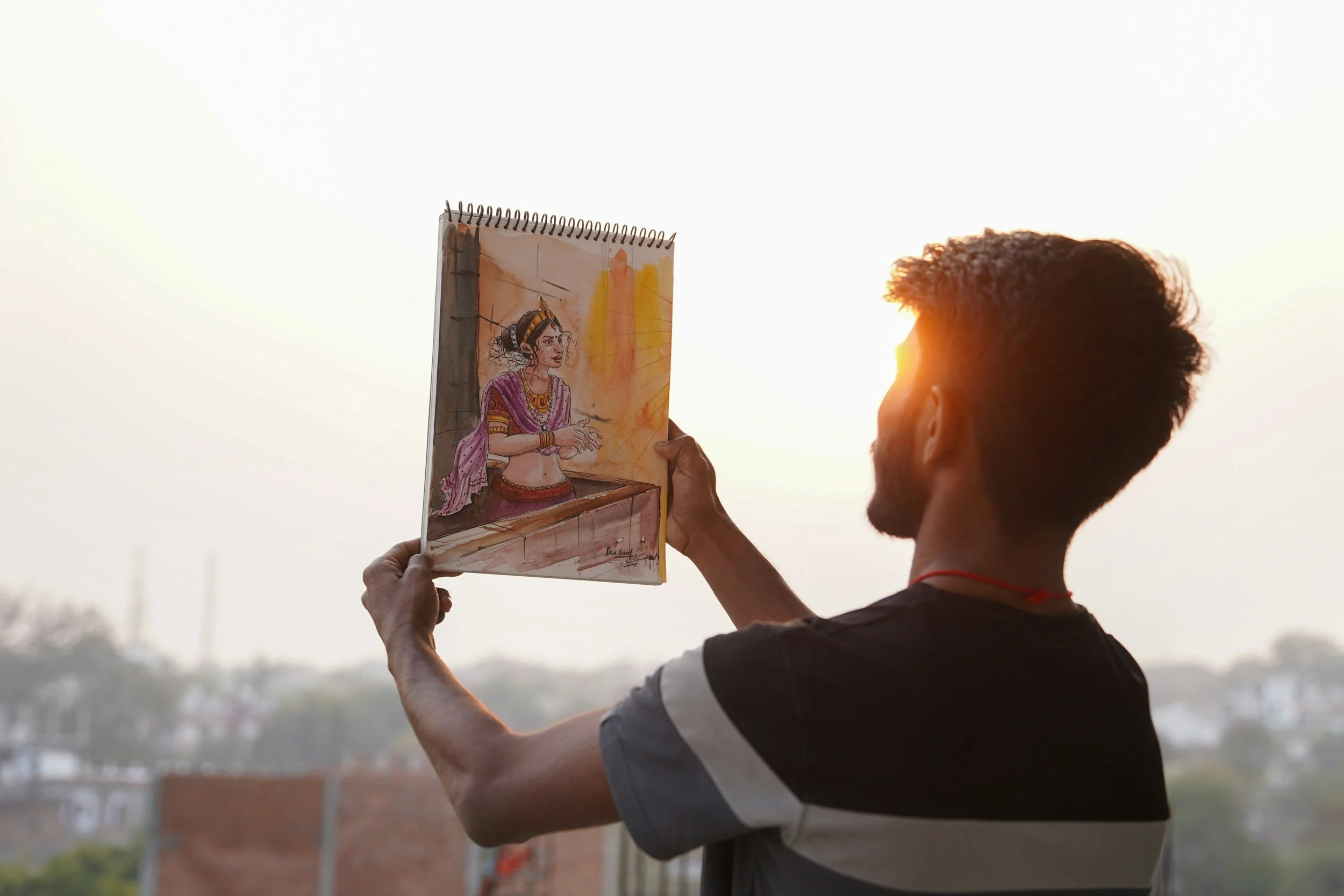
Photo by ARTO SURAJ on Unsplash
In India, nobody studies Arts for the career prospects. Arts students are of mainly two varieties. Those who really want to study arts because they like it, and those who have no other option after being unable to get into science or commerce.
Because the science and commerce streams offer a viable path to employment, the study of Arts is relatively uncommon even among poor and marginalised populations. After all, when you don’t have food, you are unlikely to find value in artistic pursuits. They’re a luxury.
This ends up meaning that the Humanities suffer from a dual reputation, neither of which makes the arts student look good.
The first reputation is that the Arts Stream (and consequently, at least in popular imagination, art itself) is an inferior pursuit. The Indian middle class looks down upon it, uses sexist phrases like “only girls study arts”, and tells its children horror stories about “ending up” in Arts if they don’t study well. Arts students face derision their entire academic lives from children who chose engineering or medicine as career paths. End result - The Arts student as loser reputation.
And then there is the second reputation. Because Arts don’t pave the path to a secure career, they are taken up by those who don’t have to worry about a secure career. These are often the rich and well-to-do. They can afford to choose the Humanities because their bread and butter is taken care of and they don’t need to force themselves into engineering and medicine to be able to survive. End result - The Arts student as privileged reputation.
In the collective imagination of modern middle class India, these two reputations coalesce to create a picture of the quintessential Arts student as a lazy, entitled, privileged, troublemaker. To be sure, many artists do fit that description, but so do a lot of engineers. You don’t need to be a rocket scientist to be able to tell that Indian society treats engineers and doctors very differently from Artists. Science stream pass-outs are lauded as valuable members of society and experts at everything (including Arts subjects like politics and history BTW). The Artist is seen as either a loser, or someone to be envied and destroyed because they represent decadence and sloth.
The artist therefore, finds himself at constant war with the world around him. His friends look down upon him, his family questions his choices, his society wants to punish him for expressing himself, his government wants to send him to jail for writing and painting and telling jokes, MBAs want to steal and monetise his work without paying him, engineers want to build tools to steal his work and even his skills to feed their machines.
Curiously enough, nobody feels bad about doing any of these things. The Arts student is a rich and privileged loser, remember? He deserves all this. There is nothing wrong with stealing from him, belittling him, punishing and jailing him. He is the one who brought this all upon himself. None of this would be happening if he had been a useful member of society, if he had not made all that noise, if he had been employable.
But why exactly did the arts student choose arts? What is the actual value of the arts, outside of the market?
In the market scheme of things, the artist is useful only as a resource to be exploited. But when you start seeing human beings as more than work drones in the backdrop of a market economy, the artist and his work start proving valuable in a multitude of ways.
Martha Nussbaum, in her book Not For Profit: Why Democracy Needs the Humanities has this to say about why the Humanities matter:
The humanities have been threatened since their very beginning. Socratic questioning is unsettling, and people in power often prefer docile followers to independent citizens able to think for themselves. Furthermore, a lively imagination, alert to the situations, desires, and sufferings of others is a taxing achievement; moral obtuseness is so much easier. So we should not be surprised that the humanities are under assault, now as ever. The battle for responsible democracy and alert citizenship is always difficult and uncertain. But it is both urgent and winnable, and the humanities are a large part of winning it.
What the author is referring to here is value that capitalist framing cannot capture. The disciplines that challenge the status quo and the powerful protectors of that status quo are not medicine and engineering. They’re political science, sociology, economics, and history. The works that shatter social biases don’t come from labs and offices of the capitalist machine. They come from art, literature, music, and cinema. The voices that question technological overreach don’t come from those employed in corporate office spaces. They come from the throats of the unemployable, the losers, the ones who your parents warned you against, the ones you steal from to make yourself look smart.
Surely, this is value as well. Surely, the value of a discipline can’t be determined only through the job opportunities it opens up.
Should we see universities and education only as pathways to employment? If yes, then sure, it makes sense for everyone to abandon the Humanities and seek more financially rewarding pastures.
But if education is to mean something more, if it is to be seen as a path to a more enlightened and equal society, then there is value in studying arts in this era of bold new dehumanising technologies. Especially, in this era of bold new dehumanising technologies.
So yes, I do think there is a use to studying the Arts. But not everyone agrees on the definition of “use”. If use means enhancing the availability of jobs, then sure science is a better direction to go in, at least right now. But if use is defined as the protection of civic understandings, the rights of free citizens, the upkeep of democratic values, and protecting what makes us all human, then yes, studying the Arts is quite possibly the most “useful” thing one can do.
We live in a world where everyone from parents to politicians to tech companies devalues the arts. They tolerate it as long as it is possible to do so in the service of the control machine, but beyond that, art is actually dangerous to them and the systems that make them powerful. It is not for no reason that those in power defund Humanities education to make way for factories that build mindless employees who can’t and won’t question the systems that govern their lives.
Jobs are important, but they’re not the only thing that is important. The Arts represent the cutting edge of human civilisation. It’s where power lives and dies. It is made of things that remind us what being human means.